
Smartstarter projects use an all-or-nothing model driven by smart contracts – connecting backers with their supporters.
Rewards like NFTs, physical goods, or acknowledgments may be offered but are not guaranteed.
If the funding goal isn’t reached in time, all contributions are automatically refunded to backers.
Details
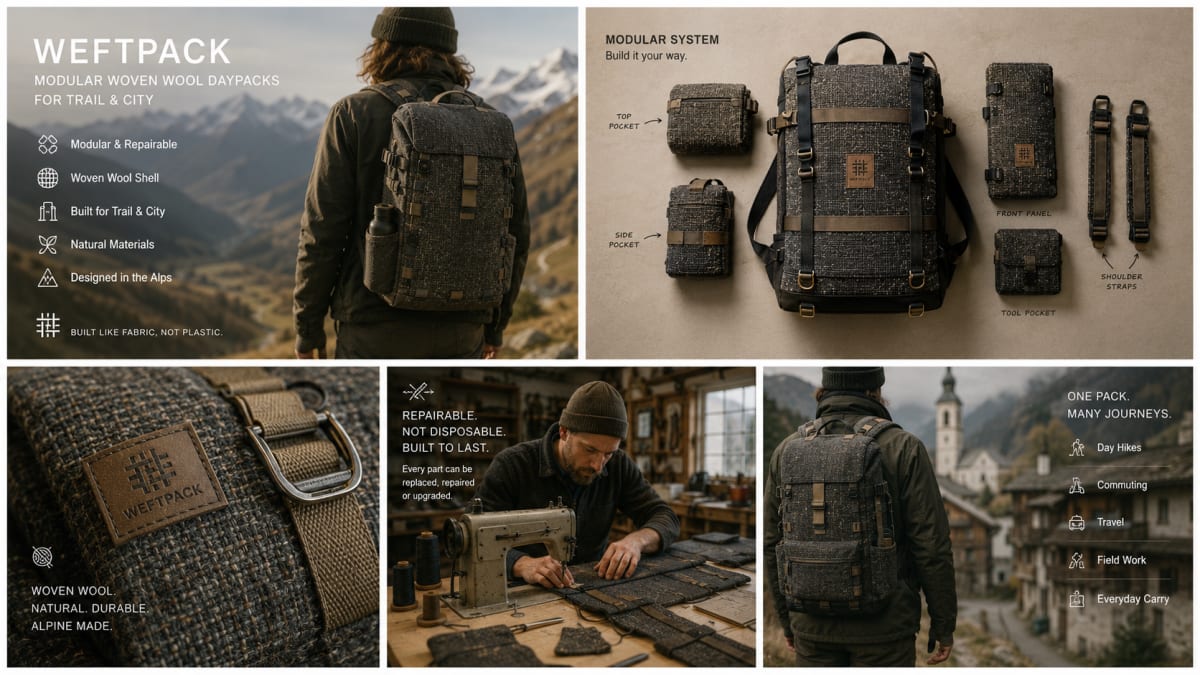
🎒 WEFTPACK — A Backpack Built Like Fabric, Not Plastic
Most backpacks today are made from layered synthetics that are hard to repair, impossible to recycle, and designed for replacement instead of longevity.
WEFTPACK starts from a different idea:
What if a backpack were built like a woven system — modular, replaceable, and structurally intelligent — instead of glued and laminated?
Drawing from Alpine weaving structures and load-distribution patterns found in traditional textiles, WEFTPACK uses dense woven wool panels combined with plant-based reinforcement layers to create a soft-structured but highly durable pack.
It’s designed to be:
- Repairable instead of disposable
- Modular instead of monolithic
- Natural-fiber dominant instead of plastic-dominant
- Field-serviceable with simple tools
🧵 How It’s Different
Instead of one stitched shell, WEFTPACK is built from interlocking woven panels:
- Replaceable back panel
- Swappable pocket modules
- Adjustable strap anchors
- Clip-in internal organizers
- Repair-friendly seam channels
If one part wears — you replace that part, not the whole bag.
🏔 Designed for Dual Use
WEFTPACK is made for:
- Day hikes
- Train & city commuting
- Field sketching & research trips
- Slow travel
- Craft & tool carry
- Lightweight gear days
Material behavior is tuned for Alpine climates: breathable, temperature-stable, and abrasion-resistant.
🌿 Materials System
Core materials include:
- Dense woven local wool shell
- Plant-based reinforcement grid
- Natural rubberized base panel
- Linen strap webbing
- Aluminum hardware (no brittle plastic clips)
All modules are labeled and pattern-documented for future repair or remake.
🧪 Prototype Status
We have completed:
- 4 functional pack prototypes
- Load testing up to 14 kg
- Abrasion tests on woven panels
- Rain exposure trials with wool wax finish
- Modular strap anchor testing
- Field use with hikers & textile workers
Key feedback: comfort + temperature regulation outperform synthetic packs.
💰 What Funding Enables
Your support will fund:
Item | Allocation |
Tooling for modular panel system | $4,200 |
Material batch (wool + linen + hardware) | $3,800 |
Workshop equipment upgrades | $2,900 |
Field durability testing | $1,600 |
Repair kit & spare module production | $2,300 |
Pilot run (120 packs) | $2,000 |
Stretch goal: open repair manual + pattern release.
Risks & Challenges
Modular textile engineering is less standardized than synthetic gear manufacturing. We are mitigating through extended field testing and redundant panel designs. Hardware suppliers have been pre-qualified to avoid delays.
leonhard_vrecko#
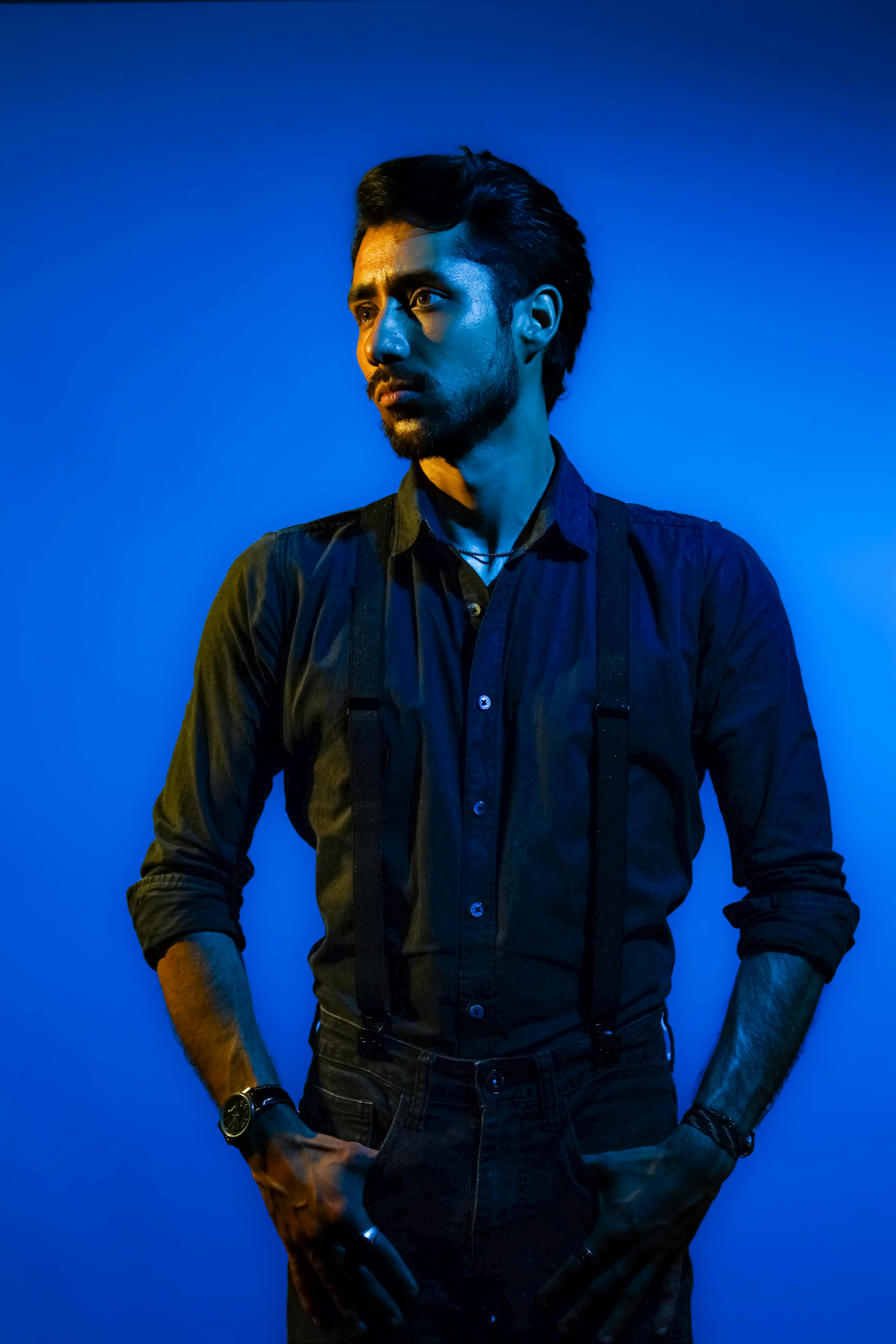
I’m Leonhard Vrecko, a textile designer and fashion anthropologist from the Alpine valley of Vorarlberg. My roots trace back to Slovenian weaving traditions, and I’ve spent the last few years exploring how heritage craft can meet modern sustainability. With MURA, I’m bringing local wool, zero-waste design, and slow fashion into harmony—one handwoven jacket at a time. I work closely with Alpine shepherds, local weavers, and a deep respect for the land that sustains us.